

DAFI is UNHCR’s Tertiary Refugee Scholarship Programme for the 2026/2027 academic year, open to recognized refugees and asylum seekers who want an undergraduate degree or an accredited vocational qualification in their country of asylum. It covers tuition, accommodation, feeding, transport, and study materials, but not Master’s degrees. In Nigeria, applications go through UNHCR’s DAFI desk at nigab@unhcr.org, not one universal online link, and the deadline is set locally, so ignore dates you see quoted for other countries like Rwanda. Reach out early with your refugee registration proof, academic records, admission letter, and a personal statement ready.
If you’re a refugee or asylum seeker living in Nigeria and you’ve been wondering how you’ll fund university, DAFI is one you need to know about. UNHCR just opened applications for the 2026/2027 academic year, and it’s one of the few scholarships built specifically for refugees who want to study at degree level.
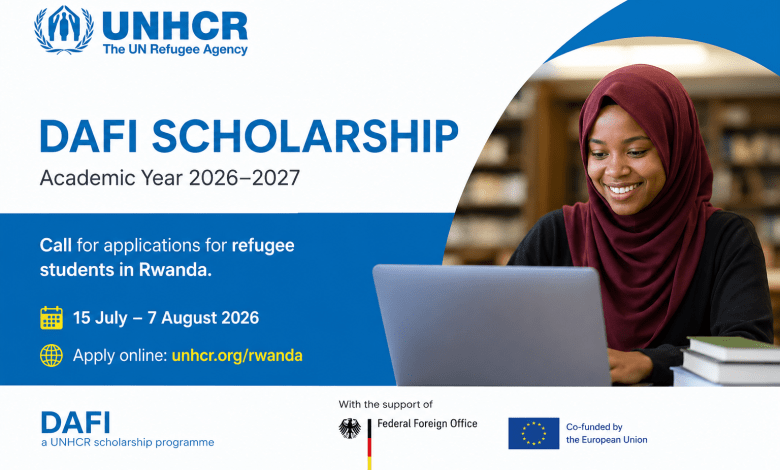
A lot of people hear “scholarship” and assume it’s one of those things you read about once and never see again. DAFI isn’t that. It’s been running for years now and has helped thousands of refugee students across Africa get through university without carrying the full weight of tuition and living costs alone.
What Exactly Is DAFI
DAFI stands for the Albert Einstein German Academic Refugee Initiative, but honestly, nobody calls it that. Everybody just says DAFI. It’s UNHCR’s Tertiary Refugee Scholarship Programme, and the idea is simple: help recognized refugees, and in some countries returnees too, earn an undergraduate degree in the country where they currently live.

It’s not only for regular bachelor’s degrees either. DAFI also covers shorter technical and vocational programmes, as long as the programme runs for at least two years and leads to a real qualification that can get you a job. One thing to note though, DAFI does not fund Master’s degrees. If you already have a first degree and you’re hoping to use DAFI for a Master’s, that’s not what this one is for.
Who Can Apply
You need to be a recognized refugee or an asylum seeker to qualify. If you already have, or are in the process of getting, admission into an accredited Nigerian university or tertiary institution, that puts you in a strong position, since proof of admission is usually a key part of the application.
Beyond that, here’s what UNHCR generally checks for in every DAFI cycle. You shouldn’t currently be receiving another higher education scholarship, since DAFI is meant for students who genuinely have no other funding option. If your resettlement to a third country has already been confirmed, you won’t qualify either, since the scholarship is for students building a life where they currently reside. And UNHCR only allows one person per family to hold a DAFI scholarship at a time, so the limited slots can reach as many different households as possible.
Female applicants and students with disabilities are especially encouraged to apply. UNHCR has been open about wanting more young refugee women in higher education, so if you’re a young woman on the fence about whether to bother, take this as UNHCR practically nudging you to.
What DAFI Actually Covers
This is the part most people search for, so let’s not bury it. If you’re selected, DAFI can cover your tuition fees and study materials, transportation to and from school, feeding, and accommodation. Depending on what your country’s programme can support, some scholars also get academic preparatory classes, language support, ICT training, and even psychosocial support where it’s needed.

Scholars aren’t just handed money and left alone, sha. UNHCR and its partners stay in touch with your school to check how you’re doing, and there are DAFI alumni networks and student clubs in several countries where past and present scholars connect and mentor each other. For someone who’s already lost a lot just by being displaced, that kind of support matters almost as much as the money.
How to Apply in Nigeria
Pay attention here, because this is the part a lot of blog posts are getting wrong right now. Some of them are quoting an application deadline of 7 August 2026 for DAFI. That deadline is real, but it belongs to Rwanda’s own DAFI call, not Nigeria’s. DAFI doesn’t run on one global deadline. Each country office sets its own timeline based on its academic calendar, so don’t assume the Rwanda date applies to you here.
For Nigeria specifically, applications and enquiries go through the UNHCR Nigeria DAFI desk directly. Reach them by email at nigab@unhcr.org to request the current application form and find out exactly which documents they want and when this cycle closes. If you’re already registered with UNHCR or NCFRMI (the National Commission for Refugees, Migrants and Internally Displaced Persons), your caseworker or protection officer can also point you in the right direction, since they’re usually informed as soon as a new DAFI call opens.
While you’re getting that sorted, it helps to have these ready so you’re not scrambling once the form lands in your inbox: proof of your refugee or asylum seeker registration, your secondary school certificates and transcripts, your admission letter or proof of acceptance from a Nigerian tertiary institution, valid identification, and a personal statement on why you want to study your chosen course.
No dulling on this one. Don’t wait for a fixed deadline to show up somewhere before you start. Email nigab@unhcr.org now, mention you’re asking about the 2026/2027 DAFI cycle in Nigeria, and let them guide you from there. Refugee response offices handle a lot of enquiries, so writing in early gives you a better shot at a response before slots fill up.
Should You Bother Applying
If you’re a refugee or asylum seeker in Nigeria with decent grades and a genuine interest in furthering your education, yes, apply. DAFI won’t work for everyone, since spaces are limited and priority tends to go to strong academic performers and those with no other funding. But scholarships built specifically for refugees don’t come around often, so it’s worth the effort of writing that email and pulling your documents together.


