

Payment of the AGILE ₦60,000 cash transfer for schoolgirls is going on in some states, and some parents say their daughters have already received it. Gombe and Kogi have both started giving out ATM cards to a second batch of girls.
Not every state is at the same stage, though. Don’t assume your daughter’s money has been paid, or that it’s coming this week, until her school or the state AGILE office tells you.
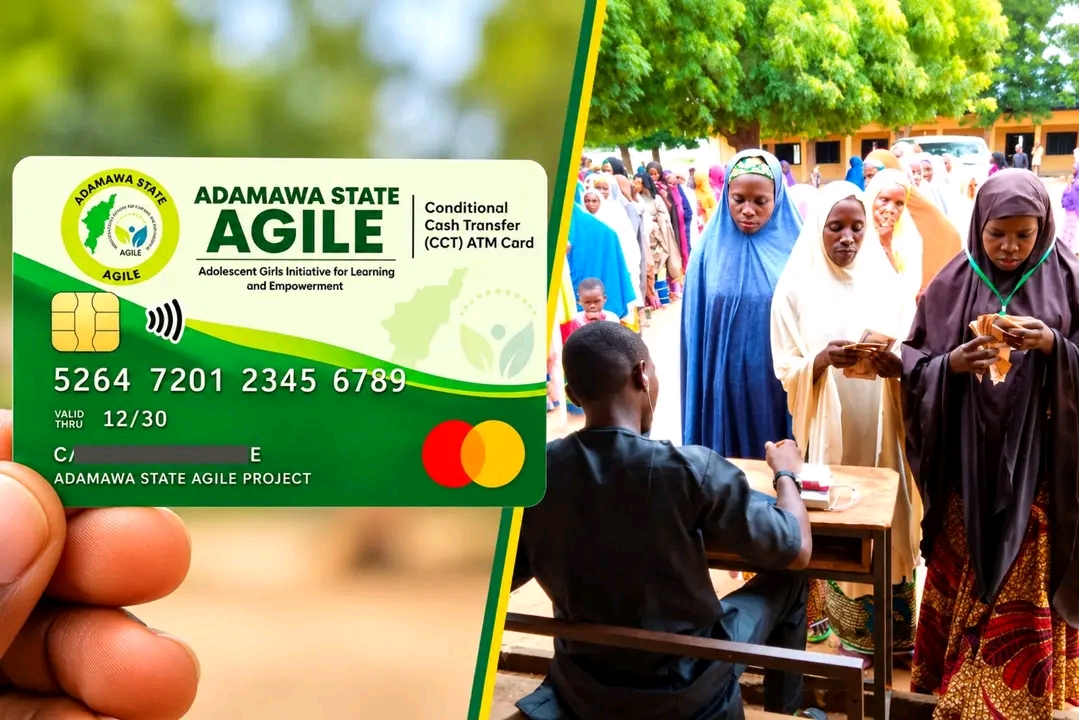
Quick facts about the AGILE ₦60,000 cash transfer payment
| Item | Details |
|---|---|
| Programme | AGILE (Adolescent Girls Initiative for Learning and Empowerment) Conditional Cash Transfer |
| Amount | ₦60,000 per girl in total in Bauchi, paid in parts. Other states have announced different amounts (see the state table below) |
| Payment status | Ongoing in some states. Gombe and Kogi have started ATM card distribution for the second batch |
| Condition | At least 70% school attendance for the later payments |
| Who runs it | The Federal Ministry of Education and state AGILE project offices, with World Bank support |
| Cost | Don’t pay anyone to get it |
About the AGILE project and this cash transfer
AGILE stands for Adolescent Girls Initiative for Learning and Empowerment. The World Bank helps to fund it, and the Federal Ministry of Education runs it together with the states. The aim is to get more girls into secondary school and keep them there until they finish.
The cash transfer is one part of the project. It’s meant to ease what parents spend on a girl’s schooling, things like uniforms, bags and sandals. In some states the project also repairs and builds schools.

Where the AGILE cash transfer payment is going on now
Gombe has started giving ATM cards to adolescent girls in public schools under the second batch of the Conditional Cash Transfer. The Commissioner for Education, Associate Professor Aishatu Umar Maigari, said it shows the government’s commitment to girl-child education. The state AGILE Coordinator, Dr Amina Haruna Abdul, said enrolment and retention have improved among the girls.
In Kogi, the project began giving ATM cards on October 1 to 12,112 girls in its second batch. The first batch had 13,359 girls. The cards come preloaded with ₦40,000, and officials are going round the three senatorial districts.
Bauchi started paying 12,133 girls back in February. The state coordinator said then that the programme had grown from 100 to 200 schools, with about 40,000 girls targeted for the second batch.
Nothing has been confirmed yet for the other states. Payment dates, amounts and batches change from one state to the next.
How the ₦60,000 AGILE cash transfer is shared
Bauchi gave the full breakdown. A girl moving from primary school to JSS1, or from JSS3 to SS1, gets paid like this:

- ₦15,000 as registration support
- ₦25,000 for transition costs in the first term, which makes the first payment ₦40,000
- The rest of the ₦60,000 comes later, ₦10,000 at a time, and those ones depend on her attendance
She must attend school at least 70% of the time for the later payments. Officials in Kano also said the 70% has to be kept up for a girl to stay eligible. So if she keeps missing school, the later payments can stop.
What each state has announced for the AGILE cash transfer
The ₦60,000 isn’t paid the same way everywhere. Some of these were announced earlier than this month, so confirm where your state stands now.
| State | What was announced |
|---|---|
| Bauchi | ₦60,000 package: ₦15,000 registration, ₦25,000 transition, then ₦10,000 payments tied to 70% attendance |
| Kogi | ATM cards for the second batch, preloaded with ₦40,000 |
| Kwara | ₦40,000 for at least 32,420 girls in public secondary schools, plus another ₦10,000 per term for girls who attend regularly and do well in class |
| Yobe | Over ₦60,000 a year for 40,630 girls in the first batch |
| Sokoto | ₦60,000 a year in four instalments, planned for over 42,000 pupils |
| Kano | Yearly amount raised from ₦20,000 to ₦60,000, with the 70% attendance condition |
Who gets the AGILE cash transfer
- Girls in public secondary schools in states where AGILE is running.
- Mostly girls who are moving up, meaning primary 6 to JSS1 and JSS3 to SS1. This is how Yobe and Bauchi described their first batches.
- Girls from the poorest homes. Kwara’s coordinator said the cash transfer is for the poorest parents.
- In Nasarawa, some out-of-school girls aged 10 to 20 also get termly payments of ₦15,000 to ₦25,000.
Who gets picked depends on the state. Ask your state AGILE office about your own daughter’s case.
What parents and guardians should do about the AGILE cash transfer
- Ask the school principal, or go to your state AGILE project office, and confirm if your daughter is enrolled and whether her batch has been paid.
- Get her documents ready. The Bauchi coordinator asked parents for NIN, birth certificate and bank details, and your state may ask for something slightly different.
- Collect the ATM card from the project officials in your state, not from a random person.
- Make sure she goes to school regularly. That’s the 70% rule.
Don’t pay anybody to get the AGILE cash transfer. If someone asks for money to put your daughter’s name on a list, walk away and report it to the state AGILE office.
More payment and education updates on ApplyTimes.com
- The Federal Government has started paying the ₦30,000 September 2026 TVET stipend, and you can read about the TVET stipend payment here.
- Keystone Bank is asking some YEIDEP applicants to come in for ID verification. See the YEIDEP update.
- Got an older child heading to university? The post on NELFUND student loan and scholarships in Nigeria explains the difference between the two.
- Public universities must finish 2026/2027 admissions by October 31, so accept your JAMB CAPS offer now.
- More government payments and programmes are in the Government Opportunities section, and school news is under Education News.






May almighty Allah blessing you my he always stand by your side.